
Financial institutions face constant pressure to keep customers safe, protect cash assets, and reduce risk across large and often exposed sites. In Atlanta, where banks and standalone cash machines sit near busy roads, retail centers, and residential neighborhoods, the need for visible and responsive security is clear. This is where mobile patrols help protect ATMs by providing a flexible security presence that responds to real movement, real threats, and real locations, rather than relying solely on fixed defenses.
Criminal activity around ATMs rarely follows a fixed pattern. It changes by time of day, location, and opportunity. Static security measures alone struggle to adapt. Mobile patrols provide visibility, deterrence, and a fast response in areas that require coverage beyond a branch’s interior.
Key takeaways
- Mobile patrols create visible deterrence across multiple ATM and banking locations
- Patrol routes can adjust to local crime trends and peak risk hours
- Faster response reduces theft, damage, and customer safety concerns
- Patrols strengthen existing alarm and camera systems
- Regular presence builds trust for customers and staff
Why ATMs and bank perimeters are frequent targets
ATMs combine cash access with public exposure. Many are outdoors, lightly supervised, and accessible twenty-four hours a day. Bank perimeters often include parking lots, drive-through lanes, rear entrances, and service areas with limited visibility.
These conditions increase the risk of:
- ATM theft and forced entry attempts
- Card skimming and fraud devices
- Vandalism and property damage
- Robbery and customer intimidation
- Trespassing and after-hours loitering
Criminals observe patterns closely. Long gaps between checks or a lack of visible security increase confidence. Mobile patrols break this predictability.
What mobile patrols provide for banking security
Mobile patrols follow planned schedules while keeping enough variation to avoid routine. Officers inspect ATMs, surrounding areas, and bank exteriors during high-risk periods such as overnight hours, early mornings, and weekends.
Each patrol visit includes exterior inspections, presence checks, and immediate reporting. Officers watch for signs of tampering, attempted break-ins, suspicious behavior, and environmental risks such as broken lighting or unsecured doors.
Because patrols move between locations, they provide broader coverage than static guards while remaining cost-effective.
How visibility reduces ATM related crime
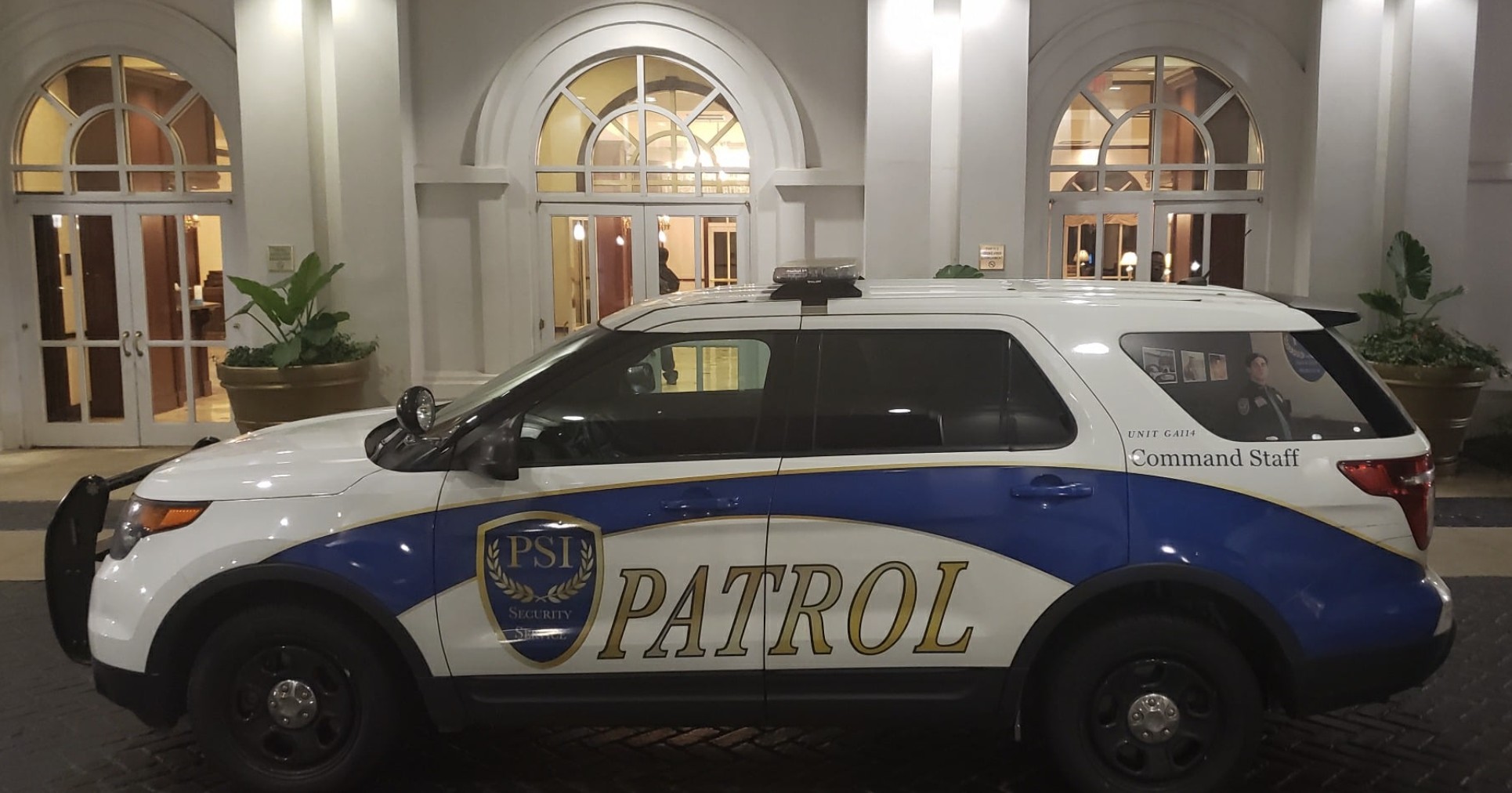
Visible security changes behavior. A marked patrol vehicle at an ATM indicates active monitoring and regular checks.
This presence:
- Interrupts suspicious activity before it escalates
- Discourages repeat attempts at known locations
- Reassures customers using ATMs at night
- Signals to nearby businesses that the site is monitored
In mixed-use areas across Atlanta, this reassurance directly affects customer confidence and ATM usage.
Why unpredictability matters in mobile patrols
Fixed routines are easy to study. Criminals adapt quickly to predictable schedules. Mobile patrols remain effective when routes and timing vary within structured plans.
This approach creates:
- Fewer patterns for criminals to exploit
- Broader coverage across ATM networks
- Reduced risk of targeted attacks
- Patrol schedules are refined using incident history, local crime data, and seasonal trends to stay aligned with real risk.

Supporting security technology with human presence
Cameras, alarms, and access controls are essential to ATM and bank security. Yet technology alone does not intervene. It records and alerts but does not deter or investigate.
Mobile patrol officers respond to alarms, verify alerts, and identify issues that technology may miss. This includes early signs of tampering, changes in foot traffic, or suspicious behavior that does not trigger an alert.
The strongest security strategies treat mobile patrols as a physical extension of electronic systems.
Faster response reduces loss and disruption
Response time directly affects outcomes. A quick patrol response can stop a minor issue from becoming a major incident.
Examples include removing skimming devices before customer data is compromised or stopping vandalism before structural damage spreads. Since patrols already operate nearby, response times are shorter than relying on emergency calls after damage occurs.
This limits repair costs, downtime, and customer inconvenience.
Protecting multiple ATM locations efficiently
Many financial institutions manage dozens of ATMs across the Atlanta metro area. Assigning full-time guards to each location is rarely practical.
Mobile patrols rotate coverage across multiple sites. A single patrol unit can inspect several ATMs and branch exteriors during one shift. This provides a consistent security presence without excessive staffing costs.
This model works well for regional banks, credit unions, and institutions with distributed assets.

Enhancing customer safety beyond the ATM machine
Security extends beyond the ATM itself. Customers move through parking areas, sidewalks, and entry paths that may feel exposed, especially after dark.
Mobile patrol officers monitor these surrounding areas. Their presence lowers the risk of ambush-style crimes and creates a safer environment for late-night withdrawals and deposits.
For banks, this sense of safety supports long-term customer trust.
After hours and overnight risk coverage
Most ATM related incidents occur outside normal business hours. Branches are closed, staff are absent, and nearby businesses may be shut down.
Mobile patrols focus on these gaps. Officers check locks, doors, and service areas during overnight and early morning hours when risk is highest. Problems are identified and addressed before business resumes.
Adapting to Atlanta’s varied banking environments
Atlanta includes dense commercial districts, suburban shopping centers, and standalone roadside ATMs. Each setting carries different risks.
Mobile patrols adapt routes based on traffic patterns, lighting conditions, and known problem areas. Officers familiar with local neighborhoods recognize unusual activity quickly because they understand normal patterns.
Improving staff confidence and daily operations
Regular patrols improve staff confidence, especially among employees who open early or close late. Maintenance crews and cash service teams also benefit from knowing sites are checked frequently.
This confidence allows staff to focus on service and operations rather than personal safety concerns.
Reporting, documentation, and compliance support
Mobile patrol services generate detailed reports for each visit. These logs document time on site, observations, and actions taken. For financial institutions, this documentation supports audits, insurance requirements, and internal risk management.
Clear reporting shows proactive security management rather than a reactive response.
When mobile patrols deliver the strongest value
Mobile patrols are most effective when:
- ATMs are spread across multiple locations
- Crime patterns are inconsistent or time-based
- Static guards are not feasible at every site
- Banks want visible deterrence without fixed staffing
They are designed to strengthen, not replace, existing security layers.
Clearing up common misconceptions
Some assume short patrol visits lack impact. In practice, frequency, visibility, and unpredictability matter more than long stays.
Others wait to add patrols until after incidents occur. Results improve when patrols are in place before problems escalate.
ATM and Bank Perimeter Security FAQs Using Mobile Patrols
How often should mobile patrols inspect ATMs?
Frequency depends on location risk, transaction volume, and crime history. High-risk sites often require multiple nightly visits.
Do mobile patrols replace CCTV and alarm systems?
No. Mobile patrols support these systems by responding to alerts and identifying issues that technology alone cannot address.
Are mobile patrols suitable for small banks or credit unions?
Yes. Mobile patrols provide cost-effective coverage for institutions with limited staff or multiple ATM locations.
Can patrol routes be customized for specific ATM locations?
Routes and schedules are adjusted based on site layout, operating hours, and local risk factors.
Do patrol officers interact with ATM users?
Officers remain professional and approachable, offering reassurance without disrupting normal ATM use.