Security cameras are a valuable part of a business security plan, but they primarily observe, record, and alert — they don’t physically intervene. Businesses that pair cameras with lighting, access control, physical barriers, and, in some cases, patrols or guards close the gap between recording an incident and actually responding to one.
Key takeaways
- Cameras excel at monitoring, evidence, and remote visibility — but a camera alone can’t stop or delay an incident in progress.
- Common blind spots include poor lighting, obstructed angles, connectivity issues, and simply having no one watching the feed in real time.
- The strongest security plans combine several layers — cameras, alarms, lighting, access control, physical barriers, and human patrols or guards — each performing a different function.
- Not every business needs on-site guards; the right combination depends on property size, inventory, foot traffic, and prior incidents.
- PSI pairs human security with existing camera systems rather than replacing them.
It’s one of the most common assumptions business owners make, and it’s easy to understand why. A camera system is visible, it runs constantly, and it produces footage — tangible proof that something is watching the property. That makes it feel like a complete solution.
CCTV can be genuinely valuable. But recording an incident and preventing or responding to one are two different things. This article looks at what cameras do well, where their limitations show up in practice, and how Atlanta businesses can close the gap between watching a problem and actually addressing it.
What Security Cameras Do Well
Before looking at limitations, it’s worth being clear about what cameras genuinely add to a security plan:
- Ongoing monitoring of entrances, parking areas, and interior spaces
- Recorded evidence that supports police reports and insurance claims
- Remote visibility, letting an owner or manager check in from anywhere
- Incident review, helping a business understand exactly what happened and when
- Identifying patterns over time, such as recurring visitors or unusual activity at certain hours
- Supporting investigations after an incident has occurred
- Visible deterrence — a camera in plain sight can make a property a less appealing target
These are real benefits, and they’re a reasonable place for any business to start. The question isn’t whether cameras are worth having — it’s whether they’re the only tool a property is relying on.
Where Cameras Have Limitations
- Blind spots created by building layout, landscaping, or equipment
- Poor lighting that reduces footage quality, especially overnight
- Obstructed views from parked vehicles, signage, or seasonal changes like foliage
- Camera positioning that misses key entry points or was never adjusted after a property change
- Connectivity issues that interrupt recording or remote access
- Equipment failure or outages that go unnoticed until they’re needed
- Delayed alerts that reach someone well after an incident has already occurred
- Footage with no one actively watching it in real time
The core limitation: a camera can capture very clear video of an incident without anyone being able to physically intervene.
Recording Isn’t the Same as Responding
This is the distinction that matters most. Having footage of an incident after the fact is useful for investigation, insurance, and prevention going forward. It’s a fundamentally different thing from having a process — or a person — in place who can respond while something is actually happening.
A camera doesn’t call anyone, check a locked door, or ask someone to leave a property. Those functions require either a monitored alarm connected to a response process, or a person — an employee, a patrol, or a guard — capable of acting in the moment.
How Layered Security Works
Different security measures perform different roles. Understanding what each one is actually built to do makes it much easier to spot where a property’s coverage has a gap:
| Security Layer | Primary Role |
|---|---|
| Cameras | Monitor and record |
| Alarms | Detect and alert |
| Lighting | Improve visibility |
| Access control | Restrict entry |
| Physical barriers | Delay or prevent access |
| Security patrols | Monitor and respond |
| On-site guards | Visible presence and response |
Read across a single row and the value is obvious: a camera monitors, but only a patrol or guard is built to respond.
When Cameras and Guards Work Together
- A guard or monitoring service notices activity through a camera feed and can act on it directly
- A patrol investigates unusual activity that a camera or alarm flagged
- CCTV footage helps a patrol or guard determine exactly where an incident occurred on a larger property
- Recorded footage supports the incident report a guard or patrol files afterward
- A visible security presence adds a human component that cameras alone can’t provide
Does Every Business Need Guards?
No — and a security provider that tells you otherwise isn’t doing you any favors. Whether guards or patrols make sense for a given property depends on a combination of factors:
- Property size and layout
- Operating hours and how much of the day the site is unattended
- Location and surrounding area
- Type and value of inventory on-site
- Any previous incidents at the property
- Foot traffic and how predictable it is
- Parking facilities and how visible they are
- Number of entrances and how well each is monitored
- Available budget
Camera & security system self-audit
Frequently asked questions
Are security cameras enough for a business?
Cameras are an important layer, but on their own they primarily monitor and record rather than respond. Most businesses get stronger protection by pairing cameras with lighting, access control, physical barriers, and — depending on the property — patrols or guards.
Do security cameras deter burglars?
Visible cameras can add a deterrent effect, but they aren’t a guarantee. Deterrence tends to be strongest when cameras are combined with good lighting, physical barriers, and visible signs that a property is actively monitored and responded to.
Do I need security guards if I already have CCTV?
Not necessarily. It depends on factors like property size, inventory value, foot traffic, entrances, and prior incidents. Cameras and guards perform different functions — monitoring versus response.
What is layered business security?
Layered security means combining several measures — such as cameras, alarms, lighting, access control, physical barriers, and patrols or guards — so that each layer covers a function the others don’t.
Can PSI Security work alongside an existing camera system?
Yes. PSI’s guards and vehicle patrols are designed to complement existing CCTV rather than replace it, adding a documented, responsive human presence alongside a property’s current camera coverage.
How PSI Adds Human Security
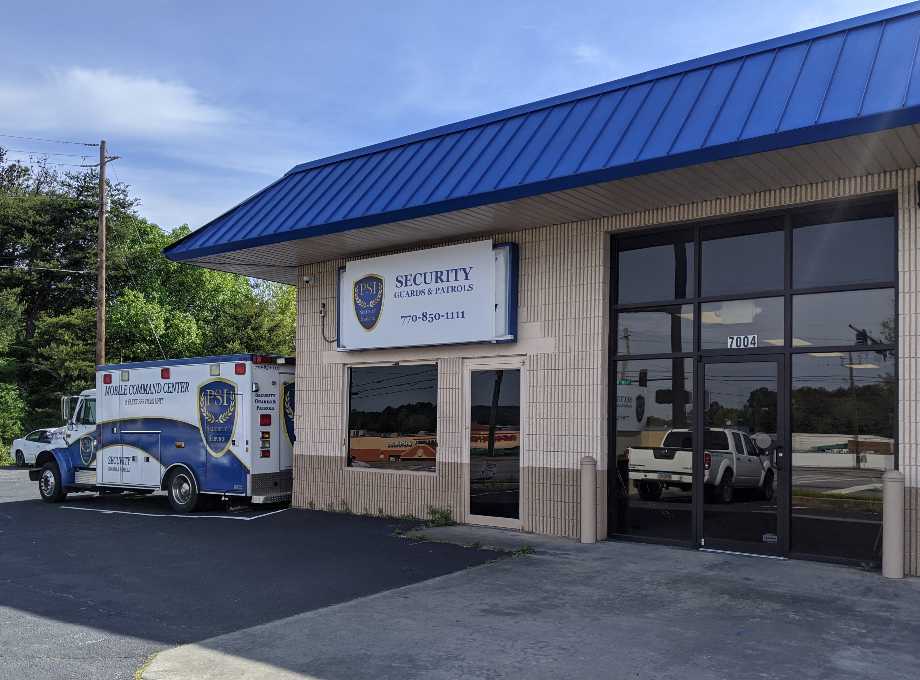
PSI Security Service provides armed and unarmed officers, mobile vehicle patrols, temporary security, and broader commercial security services across Metro Atlanta. PSI patrol vehicles use GPS tracking, verified checkpoints, and digital incident reporting, giving property owners a documented record of every check alongside their existing camera footage.
Already have cameras? Let’s talk about the rest.
PSI can review your current setup and recommend the layers that would close the biggest gaps — no obligation.
Recent Articles


Sources
- Georgia Board of Private Detective and Security Agencies: https://sos.ga.gov/georgia-board-private-detective-and-security-agencies
- U.S. Bureau of Labor Statistics, Security Guards and Gaming Surveillance Officers: https://www.bls.gov/ooh/protective-service/security-guards.htm