
SB 68, signed April 21, 2025, created a dedicated negligent security statute (O.C.G.A. §§ 51-3-50 to 51-3-57). Owners are liable to invitees only when a third-party crime was reasonably foreseeable and tied to a known hazardous condition they failed to address, and juries must now assign fault to the criminal. The law narrows liability. It does not remove the duty to keep premises reasonably safe, and the records you keep now carry more weight.
Not legal advice. This article explains SB 68 in general terms for property owners and managers. Talk to a Georgia attorney about how the law applies to your property, leases and insurance.
For years, Georgia had a reputation as a difficult state for property owners facing negligent security lawsuits. A shooting in a parking lot or an assault in an apartment breezeway could lead to a verdict against the owner. The criminal who did the harm often carried little or none of the blame in the final number.
Senate Bill 68 changed that. Governor Brian Kemp signed the bill on April 21, 2025, as part of a broad tort reform package. It created a separate legal framework for negligent security claims.[1][3] For owners and managers of apartments, shopping centers, hotels, parking decks, offices and industrial sites, the new law changes the conversation about security in practical ways. That conversation still matters.
What SB 68 changed
Before SB 68, negligent security claims fell under Georgia’s general premises liability law. Owners had to take reasonable steps to protect lawful visitors from foreseeable crimes by third parties, and courts interpreted “foreseeable” broadly.[3] SB 68 created a new Article 5 in Title 51, Chapter 3 of the Georgia Code, sections 51-3-50 through 51-3-57. It became the exclusive route for negligent security claims against owners and occupiers.[1][2]
Three changes matter most:
- A tighter liability test. Liability now depends on the injured person’s status and on proof that the crime was foreseeable and connected to a known hazardous condition.[2]
- Mandatory apportionment. Juries must assign a share of fault to the person who committed the crime.[2][4]
- Defined defenses. The statute lists situations where the owner is not liable at all, such as when the injured person was a trespasser.[2]
The new rules apply to claims arising on or after April 21, 2025. Incidents before that date are still decided under the prior law.[2]
Invitees, licensees and trespassers
Georgia premises law has always distinguished between types of visitors. SB 68 gives each category its own standard for negligent security claims.
| Visitor status | Typical examples | When an owner may be liable |
|---|---|---|
| Invitee | Customers, tenants, hotel guests, patients, delivery drivers on business | Only if all five conditions are met: the wrongful conduct was reasonably foreseeable, the injury was a foreseeable result, the conduct was linked to a known hazardous condition posing a higher-than-normal risk, the owner failed to use ordinary care to fix or limit it, and that failure was the proximate cause of the injury.[2] |
| Licensee | Social guests or people on the property for their own purposes with permission | Only if the act was foreseeable because of a specific prior warning, the third person exploited a known hazardous condition, and the owner willfully and wantonly failed to address it.[2] |
| Trespasser | Anyone on the property without permission | Not liable for negligent security. Trespasser status is a complete defense under the statute.[2] |
The statute also bars liability in several other situations. These include injuries off the premises or in areas the owner had no legal authority to control, injuries to someone committing a felony or theft-related misdemeanor, injuries in a single-family residence, and cases where the owner made a reasonable effort to notify law enforcement of a specific threat of imminent harm.[2]
How foreseeability works now
Foreseeability is the center of almost every negligent security case. Under the old approach, a plaintiff could argue that crime in the surrounding area made an attack predictable. SB 68 ties foreseeability to more concrete evidence.
According to a November 2026 legal briefing, an owner can be liable to an invitee only where it had at least one of the following:[4]
- A specific warning of an imminent threat, with actual knowledge of it
- Prior substantially similar crimes on the property itself, with knowledge of them
- Prior similar crimes within 500 yards of the property, with actual knowledge
- Prior conduct by the same perpetrator that the owner knew or should have known about
In practice, the legal question shifts from “Is this a high-crime area?” to “What did this owner know, when did it know it, and what did it do?”[4] A property with no history of similar incidents is in a stronger position. A property where incidents were reported and nothing changed is in a weaker one.
Why this cuts both ways
The narrower test protects owners who respond to what they know. It is less forgiving of owners who receive incident reports, tenant complaints or police reports and file them away. Knowledge drives liability under SB 68, so ignored information becomes the problem.
How “reasonable security” is judged
SB 68 says owners do not have to use extraordinary care against criminal acts and do not have to take on the role of law enforcement.[2] Owners still owe ordinary care. The statute lists four factors for deciding whether an owner met that standard.[2]
| Statutory factor | What it asks | Evidence that typically speaks to it |
|---|---|---|
| Measures in place | What security existed at the time of the injury? | Post orders, officer schedules, patrol logs, lighting and camera inventories, access control records |
| Need and practicality | Were more measures needed, and were they practical? | Risk assessments, incident trends, cost and feasibility notes, vendor proposals |
| Preventive effect | Would additional measures have prevented this injury? | Incident timelines, coverage maps, response times |
| Shared responsibility | How do the owner’s duties compare with those of police and government? | Records of police notifications, calls for service, coordination with local agencies |
The factors reward a documented, risk-based approach. A professional security risk audit that identifies hazards and records what was done about them directly addresses the first two factors.
Apportionment and security contractors
The largest practical change may be how fault is divided. Juries must now apportion fault among the owner or occupier, the person whose wrongful conduct caused the injury, and anyone else at fault.[2] The statute presumes, rebuttably, that an apportionment is unreasonable if the criminal is assigned less total fault than the owner, security contractor and other parties who did not commit the wrongful act. If fault is not reasonably apportioned, the court must order a new trial on liability and damages.[2][4]
The law also limits what juries hear. Parties cannot introduce evidence about the criminal’s background, the financial resources of any party, or how apportionment would affect the plaintiff’s recovery.[2] Parties also have a statutory right to try liability and damages separately, with exceptions for smaller cases and certain sexual offense claims.[4]
For businesses that hire contract security, one provision stands out. A security contractor that takes on a duty to keep part or all of a property safe can be liable only to the same extent as the owner, and never more than the owner.[1][2] Liability no longer shifts to the guard company by default, so owners and contractors should keep the contract, post orders and duties aligned.
What it means for security decisions
Some owners may read SB 68 as permission to cut security. That reading is risky. The law narrows when an owner is liable. It does not change the business reasons for security, and it still holds owners responsible for known hazards they fail to address. Legal commentators point out that hiring security officers or adding lighting, cameras and other measures can support a defense by showing the owner acted to meet its duty of care.[5]
A more useful reading of SB 68 is that it rewards security decisions that are:
- Risk-based. Matched to the property’s actual incident history and hazards rather than a generic package.
- Responsive. Adjusted when new incidents, complaints or warnings come in.
- Documented. Recorded in a way that shows what was known and what was done.
- Coordinated. Connected to law enforcement when a specific threat is identified, which is itself a defense under the statute.[2]
The “known hazardous condition” element deserves attention. Broken gates, dark parking areas, propped doors, unsecured vacant units and gaps in after-hours coverage are the kinds of physical conditions that connect a crime to a property. Fixing them, and recording that they were fixed, is the most direct way to stay outside the liability test. If your exposure is concentrated after closing time, see our guide to after-hours security in Atlanta. For lots and decks, see parking lot safety.
The records that matter
Because SB 68 turns on knowledge and response, records are central. A 2026 briefing highlights incident logs, police reports, tenant and employee complaints, surveillance and dispatch history, and timestamped records of detection, escalation and response.[4] The same briefing warns that footage of earlier incidents nobody reviewed can end up as evidence that a danger was ignored.[4]
- Keep a single incident log for the property, including near misses such as trespassing, loitering and after-hours intrusions.
- Record what action followed each incident: who was notified, what changed and when.
- Track tenant, employee and customer security complaints to resolution.
- Keep copies of police reports and calls-for-service data for the property.
- Document repairs to lighting, locks, gates, fencing and cameras with dates.
- Keep current post orders and patrol logs that match what officers actually do.
- Review security coverage at least annually, and after any serious incident.
- When a specific threat is reported, notify law enforcement and record that you did.
Patrol and officer reports are part of this record. Officers who log every round, observation and response create the timeline the statute’s factors call for. Our article on mobile patrols vs. fixed guard posts explains how each model produces different coverage and documentation.
Common misconceptions
| Misconception | What the law says |
|---|---|
| “Owners can no longer be sued for crimes on their property.” | Owners can still be liable when the statutory conditions are met. The test is narrower, not eliminated.[2] |
| “Crime in the neighborhood makes any incident foreseeable.” | Foreseeability now depends on specific evidence such as prior similar crimes on or near the property that the owner knew about.[4] |
| “Hiring a guard company shifts the risk to them.” | A security contractor cannot be held more liable than the owner or occupier.[2] |
| “Owners must act like the police.” | The statute says owners need not assume law enforcement or public safety responsibilities.[2] |
| “It applies to every case filed now.” | It applies to claims arising on or after April 21, 2025. Older incidents follow prior law.[2] |
Frequently asked questions
When did Georgia’s SB 68 take effect for negligent security claims?
Governor Kemp signed SB 68 on April 21, 2025. Its negligent security provisions apply to claims arising on or after that date. Incidents before then are governed by the previous premises liability law.
Does SB 68 mean property owners can reduce security?
Not safely. SB 68 narrows when owners are liable, but owners can still be liable when a foreseeable crime is linked to a known hazardous condition they failed to address. Reasonable, documented security measures also help support a defense.
What is a “known hazardous condition” under SB 68?
It is a condition on the property that the owner knew about and that created a higher-than-normal risk of criminal conduct. Common examples are broken locks or gates, poor lighting, unsecured access points and recurring problems the owner was told about.
Can a security company be held more liable than the property owner?
No. Under O.C.G.A. § 51-3-57, a security contractor that assumes a duty to keep premises safe can be liable only to the same extent, and with the same limits, as the owner or occupier.
What records should Georgia property owners keep after SB 68?
Incident logs, police reports, complaints and how they were resolved, repair records for security features, patrol and officer reports, camera and dispatch history, and records of any notice given to law enforcement about specific threats.
Get a second set of eyes on your property’s security
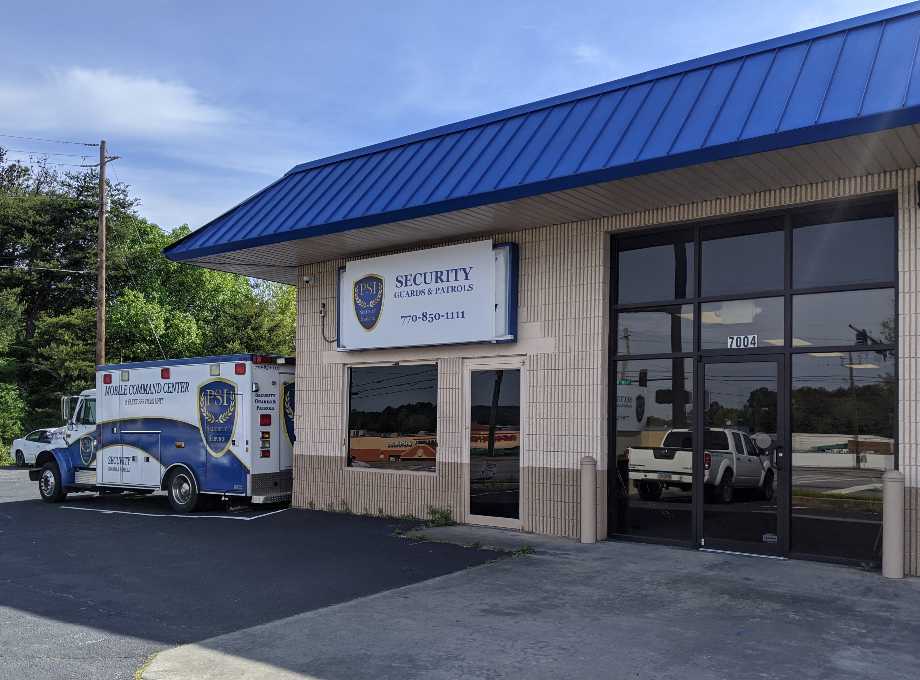
PSI Security Service is a Georgia-licensed, locally owned security company that has protected metro Atlanta properties since 1989. Our team can review your site’s risk factors, incident history, and current coverage, then recommend officers, patrols, or reporting that fit what the property actually needs.

Sources
- Senate Bill 68 (2025), as signed — Office of the Governor of Georgia
- Summary of SB 68 Tort Reform (memorandum, May 7, 2025) — HunterMaclean
- Georgia enacts sweeping tort reform: Key takeaways from SB 68 — Kennedys
- Negligent Security & Foreseeability: 2026 Briefing (updated November 13, 2026) — Intellisee
- Georgia’s Tort Reform Law (SB 68) Grants Significant New Protections to Property Owners — JD Supra
Recent Articles



Leave a Reply